
Best Refrigerator 2026: Which Style and Size Suits Your Kitchen
When you buy through the Amazon links on this page, we may earn a commission at no extra cost to you. Learn more
Last updated November 7, 2026
The best refrigerator for a narrow kitchen that still wants French-door access is the KoolMore KM-RERFDSS-18C: a counter-depth French door just 29.5 inches wide with 18.5 cu ft of space. It fits where a 36-inch model cannot and sits nearly flush with the counters.
If your opening is wider, the Hamilton Beach HBFR1504 adds drawer freezer access, and the GE GYE22GYNFS brings 22.1 cu ft in a full 36-inch width. The right pick depends on your door layout, your measurements and how much fresh food you store.
The best refrigerators for 2026

KoolMore KM-RERFDSS-18C refrigerator
See on Amazon
Hamilton Beach HBFR1504 refrigerator
See on Amazon
BLACK+DECKER BRF1600GIMW French door refrigerator
See on AmazonModel comparison
| Model | Price | Rating | Weight | Voltage | Total capacity | Best for | |
|---|---|---|---|---|---|---|---|
| | KoolMore KM-RERFDSS-18C refrigerator | $1,389.00 as of 11/07 See on Amazon | ★ 4.6 (60+ ratings) | 180 lb | 115 V | not stated | Remodelers wanting French-door styling in a narrow opening get a 29.5-inch counter-depth case with a drawer freezer and stainless finish. |
| | Hamilton Beach HBFR1504 refrigerator | $1,399.99 as of 11/07 See on Amazon | ★ 4.3 (60+ ratings) | 218 lb | 110 V | not stated | Households wanting French-door storage and a drawer freezer but lacking room for a 36-inch model get a 30.71-inch-wide fit. |
| | BLACK+DECKER BRF1600GIMW French door refrigerator | $1,399.99 as of 11/07 See on Amazon | ★ 4.2 (150+ ratings) | 193 lb | not stated | 16 cu ft | Narrow-kitchen buyers wanting a white French-door layout: 28.3 inches wide with removable doors and drawer for 30 to 36 inch doorways. |
 | GE GYE22GYNFS French door refrigerator | $2,699.99 as of 11/07 See on Amazon | ★ 4.3 (20+ ratings) | not stated | 120 V | 22.1 cu ft | Kitchen layouts where the fridge sits in the open and depth is the constraint suit this 31.25-inch-deep stainless French door. |
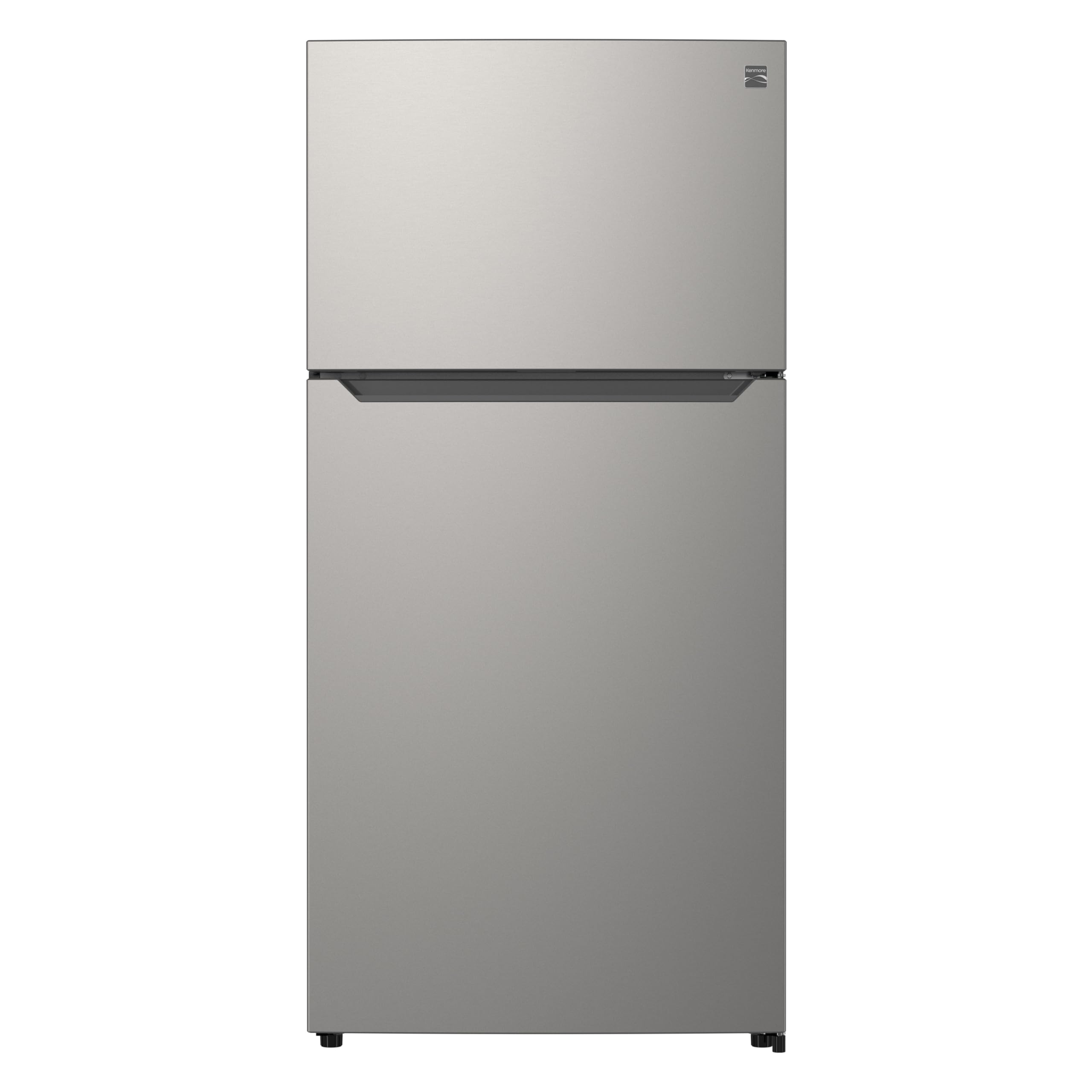 | Kenmore 4661365 top mount refrigerator | $1,048.99 as of 11/07 See on Amazon | ★ 4.4 (15 ratings) | 211.6 lb | not stated | 25 cu ft | Shoppers with a 33-inch opening or a tight budget get 25 cubic feet, spill-proof glass shelves and garage-ready sensors from 38°F to 110°F. |
Fit, finish and the details that decide daily use
Finish and color change how the unit looks against your cabinets and how much cleaning it demands. Stainless and fingerprint-resistant stainless suit modern kitchens; white blends with traditional cabinets; silver reads as a neutral. Fingerprint-resistant coatings cut smudges but still need a soft cloth.
Interior details that matter
Adjustable and spill-proof glass shelves let you fit tall items and clean up spills. Gallon door bins hold milk and juice jugs. Humidity-controlled crispers keep produce fresh. A dairy compartment keeps butter at the right temperature. LED lighting makes the back of the fridge visible. Drawer freezer access saves bending compared with a top freezer.
Ice makers and water hookups
An ice maker needs a household cold-water line. Some units include one and some offer it as an option, so decide before delivery and have the line ready. This is a plumbing decision, not a plug-in one.
Noise in open-plan kitchens
A refrigerator placed near a living area deserves attention to how it runs. A unit that cycles often or sits tight against cabinets will be more noticeable. Check the noise rating if the kitchen opens onto a living room.
Capacity and storage needs
Capacity is the number that gets quoted most and understood least. A refrigerator's listed cubic feet is the total interior volume of the box, measured to the bare walls. What you can actually load is smaller, and the gap between the two is where most buyers end up disappointed. Before you compare models, work out how much fresh-food space your household really uses and how much freezer space your shopping habits demand.
Start with people, then adjust for how you shop
Sizing rules of thumb vary widely because some count total volume and others count only the fresh-food compartment. We use fresh-food capacity as the base, since that is the space you open dozens of times a day.
- Per adult: plan on about 4 to 6 cubic feet of fresh-food space. Two adults land around 8 to 12 cubic feet of refrigerator compartment.
- Per child: count roughly half an adult share.
- Household of four: two adults and two children come to about 12 to 18 cubic feet of fresh-food space, which usually means a total capacity in the 20s once the freezer is added.
- Small households and apartments: 10 to 14 cubic feet total is workable for one person, or for a couple who cooks modestly and shops weekly.
Then adjust for behavior. If you buy in bulk, cook ahead, or shop every two weeks instead of every few days, add 2 to 4 cubic feet of fresh-food space. If you rely on frozen meals, ice, or bulk meat, weight the freezer more heavily than the rule suggests. If you eat out most nights and keep little on hand, you can size down without regret.
Total versus usable space
Listed capacity counts every cavity, including the space taken up by door bins, shelves, drawers, the ice maker, and the air gap behind the back panel. Usable space is what remains once those are loaded and the door actually closes. Expect usable capacity to run meaningfully below the label, and expect the gap to widen on models with through-door ice and water, deep door bins, or a lot of fixed shelving.
Two refrigerators with the same listed cubic feet can hold very different amounts of food. A model with adjustable, flat, full-width shelves and a couple of deep crispers will take a turkey, a sheet pan, or a stack of leftovers that a model with fixed, curved, or split shelves cannot. When you look at a floor model, judge the shape of the space, not just the number on the tag.
How the split between fridge and freezer works
Most full-size refrigerators divide roughly two-thirds fresh food to one-third freezer. That split suits households that cook fresh and keep a modest frozen stock. It does not suit everyone.
- Freezer-heavy households: bulk buyers, hunters, gardeners who freeze the harvest, and anyone who batch cooks will want a larger freezer share or a separate chest freezer.
- Fresh-heavy households: produce lovers and daily cooks benefit from more fresh-food volume, wider crispers, and humidity controls rather than freezer space.
- Ice makers: a built-in ice maker and its bin consume freezer volume. If ice matters to you, check the freezer's usable space with the bin in place.
What to check before you commit
- Read the spec sheet split: look for fresh-food and freezer capacity listed separately, not just the total.
- Measure your tallest and widest items: a sheet pan, a stockpot, a pizza box, a gallon of milk, and a party platter tell you more about shelf spacing than any capacity figure.
- Count adjustable shelves and their positions: at least two should move, and at least one should be full width and flat.
- Check drawer depth and clearance: crispers and deli drawers need room to pull out fully with the door open at 90 degrees.
- Confirm door bin height: tall bottles and half-gallon containers need a bin that clears the shelf above.
- Look at the ice maker's footprint: through-door and in-freezer units both take space you may want for food.
- Plan for airflow: an overstuffed refrigerator cools unevenly. Leave room at the back and top, and do not pack shelves tight against the rear wall.
Match capacity to your kitchen, not just your family
A larger refrigerator only helps if it fits. Standard-depth models run 30 inches deep or more and need 1 to 2 inches of clearance around the unit for ventilation. Counter-depth models sit closer to flush with cabinets but give up interior volume for the same footprint, so a counter-depth refrigerator often holds less than a standard-depth model of similar exterior size. If your kitchen is tight, decide early whether you want the built-in look or the extra cubic feet, because you cannot have both at the same width.
Also measure the path to the kitchen: doorways, hallways, stair turns, and the final opening with the doors removed. A refrigerator that fits the alcove but not the hallway is a delivery-day problem.
When to size up or down
- Size up if you shop less often, cook in batches, host regularly, or routinely find yourself rearranging to fit groceries.
- Size down if you waste food, live alone, or have a small kitchen where a bigger box would crowd the work zone.
- Add a second unit rather than oversizing the main one if your freezer needs are seasonal or occasional. A compact freezer or a convertible unit in a garage or basement often costs less than moving up a size class in the main kitchen.
Which refrigerator configuration fits your kitchen
The door style decides how you load the fridge, how much floor space it eats and how much you pay. Each layout gives you a different mix of access, space and price.
Top freezer
The freezer sits above the fresh-food compartment behind one door each. This layout is the lowest-priced of the mainstream options, because cold air falls naturally and the compressor works less. It is also the narrowest option, often 28 to 33 inches wide, which makes it the easiest fit in a small kitchen or a rental.
- Access: you bend or reach up for frozen food, and the freezer basket is shallow. The fresh-food section is at eye level, which suits most people.
- Space: the freezer takes a bigger share of total capacity than on other layouts, so a given cubic-foot rating buys you less fresh-food room.
- Price: the lowest of the five layouts, and the one most often found in budget tiers.
- Check: whether the door swings far enough to pull wide drawers out, and whether the model is rated for a garage or unheated space if that is where it goes.
Bottom freezer
The fresh-food section moves to eye level and the freezer drops below, usually as a pull-out drawer or a swing door with a bin. You get the ergonomics most cooks prefer without paying French-door money.
- Access: the best of any layout for daily fresh-food use. Frozen food requires bending, and a drawer model needs clear floor space in front to open.
- Space: similar footprint to a top freezer, typically 29 to 33 inches wide, but the drawer mechanism takes up some interior volume.
- Price: mid-range, above top freezer and below French door.
- Check: drawer glide quality and whether the drawer has its own divider or bin system, since loose items slide around in a single deep drawer.
French door
Two half-width doors open onto the fresh-food section, with a wide freezer drawer below. It is the most popular premium layout in the US and the one with the widest models, often 33 to 36 inches.
- Access: excellent. You open only half the fridge for a quick item, which wastes less cold air, and the wide drawer takes pizza boxes and sheet pans flat.
- Space: the widest layout, so measure your opening and doorway before anything else. The twin doors also need side clearance to swing.
- Price: the highest of the mainstream layouts, and the one where ice makers, water dispensers and smart features pile on cost fastest.
- Check: that both doors clear nearby walls and counters, and that the freezer drawer does not block a walkway when open.
Side by side
Two full-height doors split the unit vertically, freezer on one side and fresh food on the other. It is the narrowest way to get a full-height freezer, often 30 to 36 inches wide.
- Access: the weakest for wide items. Neither compartment is wide enough for a large platter, a sheet pan or a wide turkey, and shelves are narrow.
- Space: a tall, narrow footprint that suits a galley kitchen, but the split design wastes interior volume on door bins and dividers.
- Price: mid to upper range, and in-wall water and ice dispensers are common, which adds cost and repair risk.
- Check: interior width of the fresh-food side against your widest shelf item, and whether the dispenser height suits shorter household members.
Single door
One door, no freezer, sold as a full-size all-refrigerator or as a compact or built-in unit. It is the choice when you already have a separate freezer or need a second fridge for drinks, overflow or a garage.
- Access: the simplest of all, with the whole interior visible at once and no divider to work around.
- Space: available in narrow and shallow depths that fit where a two-door unit will not.
- Price: low for compact models, higher for built-in and column units that match cabinetry.
- Check: that it is rated for the room you plan to put it in. Many single-door units are not designed for garages or unheated spaces, and some are not meant to be built in without extra ventilation.
What to confirm before you commit to a layout
- Opening size: measure width, height and depth of the cavity, then subtract the clearance the manual requires, usually 1 to 2 inches for ventilation.
- Path to the kitchen: measure every doorway, hallway turn and stair the delivery crew will use. Units weigh roughly 200 to 350 pounds and do not fold.
- Depth style: standard depth runs 30 inches or more and sticks out past counters. Counter-depth sits closer to 24 to 27 inches and lines up with cabinets, at the cost of capacity and price.
- Door swing and handle projection: add the handle depth to the unit depth, and check which way each door opens and whether it can be reversed.
Match the layout to how you actually cook. If you open the fridge constantly and cook fresh food, a bottom freezer or French door pays you back daily. If budget and floor space rule, a top freezer is hard to beat. If the kitchen is narrow, side by side or a single door with a separate freezer can fit where a wider layout will not.
Energy efficiency and running costs
A refrigerator runs every hour of every day, so it is usually the appliance that uses the most electricity in a US home. Two labels do most of the work when you compare models: the Energy Star mark and the yellow EnergyGuide label. Here is what each one tells you and how to turn both into a realistic running cost.
What Energy Star certification means
Energy Star is a voluntary program run by the EPA. A refrigerator earns the mark only if it meets a federal efficiency spec that is stricter than the minimum legal standard. The spec is updated from time to time, so a certified model sold today is more efficient than a certified model from several years ago. Certification covers the whole unit, not one feature, and it applies to full-size, compact, and wine and beverage coolers under separate criteria.
- It is a threshold, not a ranking. Two certified fridges can differ widely in actual use. Use the mark to filter, then compare labels.
- It does not cover installation. A certified unit in a hot garage or with blocked coils can still cost more to run than a less efficient one set up properly.
- Check the current listing. Specs change, so confirm the model on the Energy Star product finder rather than trusting an old sticker or a retailer badge.
How to read the EnergyGuide label
The yellow EnergyGuide label is required by the FTC on most new refrigerators. It gives you the numbers you need to compare models side by side.
- Estimated yearly electricity use in kilowatt-hours (kWh). This is the key figure. Lower is better.
- Estimated yearly cost, based on a national average electricity price. Treat it as a comparison tool, not your bill.
- A scale showing where the model sits against similar-capacity models, from most efficient to least efficient.
- Capacity and type, so you compare like with like. A large French door unit and a compact top freezer are not in the same class.
The label conditions are standardized: a set room temperature, doors kept closed, no food added. Real use adds load, so expect your actual consumption to run somewhat higher than the label, especially in a warm kitchen or with frequent door opening.
Typical annual electricity use
Use these ranges as a sanity check when you shop. They are broad because size, type, and age all matter.
- Compact and mini fridges: roughly 200 to 400 kWh a year. Small units can be surprisingly inefficient per cubic foot.
- Standard top freezer and bottom freezer: roughly 350 to 600 kWh a year for typical family sizes.
- Side-by-side and French door: roughly 500 to 800 kWh a year, higher for large capacity, through-the-door ice and water, and dual cooling systems.
- Built-in and large premium units: often 700 kWh a year or more.
To turn kWh into money, multiply the yearly figure by your electricity rate per kWh, which you will find on your utility bill. Rates vary a lot by region and season, so run the math with your own number rather than the national average on the label.
How efficiency affects total cost of ownership
The purchase price is only the first cost. Over the years you keep it, the electricity bill can rival or exceed what you paid for the unit. A model that uses a few hundred kWh less per year can close a price gap within a few years, and the savings keep coming after that.
- Compare yearly kWh, not just the sticker price. Multiply the difference between two models by your rate and by the years you expect to keep it.
- Factor in size. A bigger fridge that is mostly empty wastes energy. Match capacity to your household.
- Weigh features that cost energy. Through-the-door ice and water, dual ice makers, and always-on smart displays add to consumption.
- Budget for upkeep. Coil cleaning once or twice a year and a good door seal keep consumption near the label figure. A worn gasket can quietly raise your bill.
What to confirm before you order
- Find the EnergyGuide figure for the exact model and capacity, not the product family.
- Confirm current Energy Star status on the official listing.
- Ask about the setup. Clearance for airflow, out of direct sun, and away from the oven or a heat source all affect real-world use.
- Check the door seal on delivery with the dollar bill check: close the door on a bill and pull. If it slides out easily, the seal needs attention.
- Keep the manual for coil cleaning intervals and filter changes if the model has one.
Efficiency will not make a badly sized fridge right for your kitchen, so settle style and size first, then use the labels to pick the cheaper unit to run among the models that fit.
Cooling technology and temperature control
Every refrigerator you compare is a box, an insulated shell and a heat pump. What separates a model that keeps lettuce crisp for two weeks from one that freezes your milk is how that heat pump is built, how the cold air is distributed, and how tightly the controls hold a set temperature. What matters is how the compressor, the evaporator count and the airflow design work together once the unit is running in your kitchen.
How the cooling system works
A compressor pressurizes refrigerant, which absorbs heat from inside the cabinet and releases it through coils on the back or bottom. The compressor cycling on and off is normal. What matters is how often it runs and how much the temperature swings between cycles.
- Standard compressor: Runs at full power and stops when the thermostat is satisfied. Cheaper, slightly noisier, and prone to wider temperature swings.
- Inverter or variable-speed compressor: Runs continuously at lower speeds and ramps up only when needed. It holds a steadier temperature, uses less energy and is usually quieter. This is the single most useful cooling feature to look for.
- Dual compressors: Separate compressors for the fresh-food and freezer sections. Rare and mostly found on premium models. They prevent freezer air from drying out the fridge, but a well-designed single-compressor unit with separate evaporators gets you most of the benefit.
Single versus dual evaporators
This is the spec most shoppers skip and later regret. The evaporator is the cold coil that air passes over.
- Single evaporator: One coil serves both compartments, and a damper blends freezer air into the fridge. Simple and common, but it moves dry freezer air into the fresh section, which pulls moisture from produce, and it can transfer odors between compartments.
- Dual evaporators: One coil per compartment, so the two sections share no air. The fridge stays more humid, produce keeps longer, and freezer smells stay in the freezer. If fresh food quality matters to you, prioritize this over almost any other feature.
Ask specifically whether the model has dual evaporators or a single evaporator with a damper. Marketing names vary, so confirm the actual coil count rather than trusting a label.
Multi-airflow and humidity control
Air distribution decides whether the top shelf is as cold as the bottom.
- Multi-airflow or multi-vent systems: Several vents feed cold air to different zones instead of one blast from the back. This flattens temperature differences across shelves, which is what keeps food at the back of the top shelf from freezing while the door bins stay warm.
- Independent zones: Some models let you set a drawer or compartment to a different temperature, such as a meat zone near 32°F or a produce zone a few degrees warmer.
- Humidity-controlled crispers: A sliding vent lets you seal a drawer for high humidity, which suits leafy greens and herbs, or open it for low humidity, which suits apples and pears that emit ethylene and speed up spoilage in neighbors. Two adjustable crispers are worth more than a single fancy one.
- Sealed crispers: A tighter seal holds humidity better than an open bin, so check that the drawer slides shut with a gasket rather than a loose gap.
Cooling specs to confirm before you buy
- Target temperatures: The fresh section should hold 37°F and the freezer 0°F. Look for a model that states its control accuracy, and treat a claim of holding within 2°F as a good sign.
- Digital controls with a display: You want to see and set the actual temperature, not a dial numbered 1 to 7.
- Temperature alarms: A door-ajar alarm and a high-temperature alarm tell you before food spoils, which matters during a power outage or a failed door seal.
- Fast chill and fast freeze modes: Useful after a big grocery run, since they pull the cabinet down quickly instead of letting warm food sit for hours.
- Defrost system: Frost-free is standard now. Confirm it is automatic and that the drain is accessible, because a clogged drain is a common cause of water on the floor.
What to check after delivery
- Let the unit stand upright for the time the manual specifies before plugging it in, especially if it was laid down in transit.
- Put an appliance thermometer in the middle of the fresh section and another in the freezer. Check both after 24 hours and again a week later.
- Adjust the control in small steps and wait a day between changes. Large swings overshoot.
- Check the door seal with a dollar bill: close the door on it and pull. If it slides out easily at any point around the frame, the seal is leaking and the compressor will run more.
- Keep the vents inside the cabinet clear. Packing food against the back wall blocks airflow and creates warm and cold pockets.
- Clean the condenser coils once or twice a year. Dusty coils make the compressor work harder and shorten its life.
Stable temperature and steady humidity do more for food freshness than any smart feature on the box. When you compare models, weigh compressor type, evaporator count and airflow design first, then look at connectivity and displays.
Smart and convenience features
Smart and convenience features are where refrigerator prices climb fastest and where repair risk is highest. Some are worth paying for, some are not, and a few can cost more to fix than they add in daily usefulness. Judge each one on its daily use and its repair risk before you commit.
Ice and water dispensers
An in-door dispenser is the most requested extra and the most common source of trouble. It adds a water line, a filter, a valve, and a dispenser assembly, and any of those can fail. Before you buy, check these points:
- Space cost: an in-door dispenser takes volume out of the door bins and often out of the fresh-food compartment. Compare usable capacity, not just the total on the label.
- Water line: you need a nearby supply and a shutoff valve. If your kitchen has no line, factor in the cost of running one.
- Filter cost and schedule: filters need replacing on a regular schedule. Add that to your yearly running cost.
- Ice maker location: an ice maker in the freezer drawer or bin is simpler and cheaper to repair than one built into the door.
- Through-the-door ice and water on side-by-side models is the classic setup, but it is also the layout that loses the most usable space.
Our advice: if you use filtered water and ice every day, a dispenser earns its place. If you mostly drink tap water and use a few ice cubes a week, skip it. A separate ice maker or a pitcher filter costs less and breaks less.
Door alarms and open-door alerts
These are cheap to build and genuinely useful, especially in a busy kitchen or a household with kids. A door left ajar wastes energy and can spoil food. Look for an alarm that sounds after a set time and a light or chime that repeats until the door closes. This is one feature we would take on almost any fridge.
Wi-Fi connectivity and app controls
Connected fridges let you change temperatures, get alerts, and sometimes diagnose faults from a phone. Ask yourself what you would actually do with it:
- Useful: temperature alerts while you are away, a diagnostic code sent to a technician before a service visit, and reminders to change the filter.
- Marginal: changing the setpoint from your phone when you are standing in the kitchen anyway.
- Risk: more electronics means more to fail, and app support can end before the fridge does. A fridge should outlast a connected app.
We treat Wi-Fi as a nice extra, not a reason to pay more. If two models are otherwise equal, take the connected one only if the price gap is small.
Other extras worth weighing
- Ice and water pitcher inside the door: gives filtered water without a through-door dispenser. Fewer parts, less to break.
- Dual ice makers: handy for large households, but each one is another assembly that can fail.
- Convertible compartments: let you switch a zone between fridge and freezer. Useful if your needs change, and usually reliable because it is a damper and a control, not a dispenser.
- Door-in-door and flexible shelving: real convenience for daily items, with little added repair risk.
- Interior cameras: let you check what you have from the store. Fun, rarely essential, and one more electronic part.
- Touchscreens and built-in apps: the highest cost and the highest repair risk. We would only pay for these if the rest of the fridge already fits your kitchen and budget.
How to decide
Rank features in three groups: must have, nice to have, and skip. Put dispensers and any screen in the skip group unless you will use them daily. Put door alarms, good lighting, and adjustable shelving in the must-have group, because they cost little and improve every day. Then compare the total price against a simpler model with the same capacity and the same fit. If the extras add more than a small share to the price, and you cannot name a daily use for them, buy the simpler fridge and put the savings toward a longer warranty or a better fit for your kitchen.
One last check: ask about the warranty on the dispenser, the ice maker, and the electronics. These parts are often covered for a shorter time than the sealed system, and that tells you how the maker views the risk.
Noise level
Noise is the spec shoppers check last and regret first. A refrigerator runs 24 hours a day, and in an open-plan kitchen or a studio apartment its hum sits in the same room where you eat, work and watch TV. The decibel rating tells you how loud it will be, and a few checks before you buy tell you whether that number will hold in your room.
Typical decibel ranges
- Under 40 dB: very quiet. You will mostly hear it in a silent room, and it rarely competes with conversation.
- 40 to 45 dB: quiet to average. This is where most modern full-size refrigerators land, and it blends into normal household background noise.
- 46 to 50 dB: audible. You will notice it in an open-plan space, especially during compressor cycles at night.
- Above 50 dB: loud for a refrigerator. Expect it to register over the TV at low volume and to be noticeable from an adjacent room.
For reference, a quiet library is around 30 dB, a normal conversation around 60 dB, and a dishwasher around 50 to 60 dB. Decibels are logarithmic, so a jump of 10 dB sounds roughly twice as loud to the ear. A 45 dB fridge is not slightly louder than a 40 dB one; it is noticeably louder.
What makes some models louder
- Compressor type and speed. Inverter and variable-speed compressors ramp up and down instead of switching on and off at full power, which smooths out the loudest spikes. Older fixed-speed compressors produce a distinct start-up thump and a steady drone.
- Condenser fan and airflow path. A fan that has to push air through a tight or dusty coil runs harder and louder. Models with a rear coil and generous clearance tend to be quieter than tightly enclosed designs.
- Ice makers and water dispensers. The auger motor, the ice drop into the bin and the refill valve all create short bursts that are louder than the fridge's baseline hum. A through-the-door dispenser adds noise right at the front of the unit, facing your kitchen.
- Defrost cycles. Every frost-free fridge runs a heating cycle periodically. Some models are near silent during defrost; others click, drip and gurgle loudly enough to notice.
- Installation and leveling. A fridge that is not level, sits on a hollow floor, or touches a cabinet or wall will transmit vibration and amplify sound. Poor clearance around the unit makes the fan work harder.
- Size and style. Larger units with bigger compressors and more airflow generally run louder than compact models, though a well-insulated large fridge can still beat a cheap small one.
Why noise matters in open-plan kitchens
In a closed kitchen, a 48 dB refrigerator is easy to ignore. In an open-plan layout, the same fridge shares airspace with your dining table, sofa and home office. Sound carries, and a compressor that cycles on during dinner or a work call is a real annoyance. The same applies to studios, apartments with the kitchen along one wall, and any home where the fridge sits near a bedroom door.
If your kitchen is open to a living area, treat noise as a top-three buying criterion alongside size and capacity, not an afterthought.
What to check before you buy
- Find the decibel rating. It is often buried in the spec sheet or the energy guide rather than on the showroom card. If a listing does not state it, ask the retailer or check the manufacturer's spec page.
- Compare like with like. Ratings are usually given for normal running, not for ice making or defrost. Ask what the number covers.
- Listen in person if you can. In a store, stand a few feet away and listen for the compressor and fan. Showrooms are noisy, so this is a rough check, but it catches obvious offenders.
- Read owner reviews for noise complaints. Search the reviews for the word noise. A pattern of complaints about rattling, humming or ice-maker clatter tells you more than a single spec number.
- Plan the install. Leave the clearance the manual specifies, level the unit, and keep it away from shared walls and bedroom partitions where possible.
- Check the return window. Noise is subjective, and a fridge that measures quiet on paper can still bother you in your own room. Know how long you have to return it.
As a rule of thumb for an open-plan home, aim for a model rated in the low 40s or below, and be skeptical of any full-size fridge with no published noise figure at all.
Price, warranty, and long-term reliability
Price tells you what a refrigerator does on day one. Warranty and build quality tell you what it will cost you over the next decade. Those are different questions, and the second one matters more, because a fridge is one of the few appliances that runs every hour of every day. Read the price tag, the warranty document and the physical signs of a model that will hold up before you pay.
How price relates to features and lifespan
Refrigerator prices cluster into rough tiers, and each tier buys you a different mix of space, styling, and complexity. More money does not automatically mean a longer life. In fact, the most feature-heavy models often carry the most parts that can fail.
- Entry tier: top-freezer and basic bottom-freezer models. Simple mechanics, fewer electronics, widely available parts. These are often the longest-lived and cheapest to repair.
- Mid tier: French door and side-by-side models with ice and water dispensers, larger capacities, and better finishes. You pay for layout and styling as much as for durability.
- Premium tier: counter-depth and large French door models with dual ice makers, variable-speed compressors, glass interiors, and smart features. Expect more sensors, more boards, and higher repair bills.
- Luxury and built-in tier: panel-ready and integrated units that sit flush with cabinetry. You are paying for fit, finish, and custom installation, not necessarily for a longer service life.
First, decide which features you will actually use, then pay for those and not for the rest. A dispenser you never touch is a future leak and a future repair. Second, treat a very low price on a complex model as a question, not a bargain. Ask why it is cheap: discontinued line, limited parts network, or a retailer-exclusive model that only one store services.
On lifespan, plan on a decade or more for a full-size refrigerator under normal use. Compact and built-in units often run shorter. A well-built simple model at a mid-tier price frequently outlasts a feature-loaded one that cost twice as much.
What a warranty usually covers, and what it does not
Almost every refrigerator comes with a one-year limited warranty on the whole unit. That covers parts and labor for manufacturing defects. The interesting details are in the longer coverage that sits underneath it.
- Sealed system: the compressor, condenser, evaporator, and connecting tubing. Many manufacturers extend coverage on these parts well beyond the first year, because a sealed-system failure is expensive and clearly a manufacturing issue.
- Compressor: some brands extend compressor coverage well beyond the general warranty. Read carefully whether that covers the part only or the part and labor. Part-only coverage still leaves you paying a large labor bill on a job that can take hours.
- Parts vs. labor: these are usually separate clocks. The parts window is often longer than the labor window. Know both dates.
- What is excluded: cosmetic damage, consumables like water filters and light bulbs, damage from improper installation, and problems caused by power surges or lack of maintenance. Most policies also require proof of purchase and may require professional installation to stay valid.
Read the warranty PDF on the manufacturer's site, not the summary on the retailer's page. Confirm whether sealed-system and compressor coverage includes labor. And check who performs warranty service in your area, because a generous warranty is worthless if the nearest authorized technician is two hours away.
Signs of a dependable model
You cannot check reliability in a showroom, but you can read the signals. These are the ones that matter before you commit:
- A long, clear warranty on the sealed system. Manufacturers do not extend coverage on parts they expect to fail.
- Widely available parts. Search for a replacement door bin, shelf, or ice maker for the model you are considering. If parts are easy to find and reasonably priced, the model is serviceable. If they are scarce or special-order only, repairs will be slow and costly.
- A large service network. Check that at least one authorized repair company covers your ZIP code.
- Fewer complex features. A single cooling system with a straightforward control board has fewer failure points than a model with dual ice makers, a beverage drawer, and app connectivity.
- Solid door seals and hinges. Open and close the door in the store. It should shut firmly with a slight resistance and seal evenly all the way around. A weak seal forces the compressor to work harder for years.
- Owner reviews that mention years, not days. Look for reviews from people who have lived with the unit for a while. Ignore reviews written the week of delivery, which mostly describe the delivery.
- A stable model line. Models that have been sold for several years have a track record and a parts supply. Brand-new designs do not yet.
What to check before you pay
- Confirm the total delivered price, including delivery, installation, and haul-away of your old unit.
- Ask whether the retailer or the manufacturer handles warranty claims, and get the service phone number in writing.
- Register the product with the manufacturer as soon as it is installed. Some warranties require it.
- Keep the receipt and the model and serial numbers somewhere you can find them. Warranty service will ask for both.
- Plug the unit into a surge protector or, better, a whole-home surge device. Control board failures are a common and often excluded repair.
- Clean the coils once or twice a year and check the door seal with a dollar bill. Maintenance you can document protects your claim if something fails.
Weigh the purchase on total cost of ownership, not sticker price alone. A cheaper model with a strong sealed-system warranty, easy parts, and local service can cost you less over twelve years than a discounted complex model with a one-year policy and no technician nearby.
Cleaning and maintenance
A refrigerator that runs well for a decade or more is usually one that gets a little routine attention. None of the tasks below take long, and most of them protect food safety and energy use.
Clean the condenser coils once or twice a year
Dusty coils make the compressor work harder, which raises energy use and shortens its life. Coils sit either behind a grille at the bottom front or on the back of the cabinet, depending on the model.
- Unplug the refrigerator or shut off its dedicated circuit before you start.
- Find the coils: pull off the front kick plate, or slide the unit out if the coils are on the back. Many units have wheels, so two people can move one safely.
- Vacuum with a brush attachment, working top to bottom. Use a coil brush for the tight gaps, then vacuum up what falls.
- Check for pet hair and lint buildup if you have animals, and clean more often in that case.
- Look for bent fins or signs of oil or frost on the coils. Persistent frost points to a defrost problem worth a service call.
While the unit is out, vacuum the floor and the back panel, and check that nothing blocks the airflow path around the cabinet.
Keep the door gaskets sealing
A worn gasket lets cold air escape and warm, humid air in, which means more frost, more running time and more condensation. Clean the gaskets every few months with a sponge and mild soapy water, then dry them. Work into the folds where crumbs and sticky residue collect.
- Do the dollar bill check: close the door on a bill so half hangs out, then pull gently. It should drag. Repeat at the top, middle and bottom of each door. If it slides out easily, the seal is failing or the door is out of alignment.
- Check that hinges are tight and that the door closes on its own from about halfway open.
- If a gasket is torn, cracked or no longer pliable, replace it. Gaskets are model-specific parts, so order by the model number on the label inside the cabinet.
Wipe down the interior on a schedule
Do a quick wipe when you put groceries away, and a full clean now and then. A full clean goes faster if you empty one shelf at a time rather than the whole fridge.
- Remove shelves and drawers and wash them in the sink with warm water and mild dish soap. Let glass shelves come to room temperature before washing so they do not crack.
- Wipe walls, door bins and the ceiling with a solution of baking soda and water, then rinse with a clean damp cloth. Baking soda lifts odors and is safe on every interior surface.
- Dry everything before you reload it. Trapped moisture encourages mold and frost.
- Clean the drain hole at the back of the fresh-food compartment with a pipe cleaner or a cotton swab. A clogged drain causes water to pool under the crisper drawers.
- Check the door bins and the ice and water dispenser area, which collect drips and residue that are easy to miss.
For odors, leave an open box of baking soda in the fridge and replace it every couple of months. If a smell persists after cleaning, check the drain pan and the area behind the kick plate.
Replace the water filter when the indicator says so
How long a filter lasts depends on your water hardness and how much water and ice you use. Change it when the filter light comes on, when flow slows noticeably, or when ice tastes off. Do not wait for a full failure.
- Find the filter housing: inside the fresh-food compartment, in the door, or behind the kick plate at the bottom.
- Twist or pull the old cartridge out, following the arrows on the housing. Expect a little water to spill, so keep a towel and a shallow bowl handy.
- Remove the protective cap from the new cartridge, insert it, and turn until it locks.
- Run several gallons through the dispenser and discard the first batches of ice. This flushes air and carbon fines out of the new filter.
- Reset the filter indicator, usually by holding a button for a few seconds.
If your model has no filter, or you choose not to use one, know that the ice and water come straight from the supply line. Clean the dispenser and the ice bin regularly in that case.
Defrost only when your model needs it
Frost-free refrigerators handle defrosting on their own, so you never need to do it manually. Manual-defrost models, mostly compact and older units, build up ice on the freezer walls and need defrosting when the frost gets about a quarter inch thick.
- Move frozen food to a cooler with ice, or to another freezer.
- Unplug the unit and leave the doors open. Put towels down and a pan under the drain.
- Let the ice melt on its own. Never chip at it with a knife or screwdriver, because you can puncture the cooling lines and ruin the unit.
- Wipe out the interior, dry it fully, then plug the unit back in and let it reach temperature before reloading.
If a frost-free freezer still builds ice, check the door seal first, then the door closure. Persistent frost usually means a defrost heater, timer or sensor needs service.
Keep it running efficiently between cleanings
- Set the fresh-food compartment to 37°F and the freezer to 0°F. Colder settings waste energy without improving food safety.
- Leave the 1 to 2 inches of clearance around the cabinet that the manufacturer specifies, and keep the top clear.
- Do not block the interior air vents with tall items or crowded shelves. Air needs to circulate for even cooling.
- Let hot food cool before it goes in, and cover liquids so they do not release moisture.
- Check that the unit sits level, so the doors close fully on their own.
- During a power outage, keep the doors closed. A closed fridge holds cold for about 4 hours, and a full freezer for about 48 hours.
The maintenance routine above is what keeps a refrigerator running at its rated efficiency for its full service life.
Food safety and ideal temperatures
Temperature is the part of refrigerator shopping you cannot see on a showroom floor, and it matters more than most features you pay extra for. A fridge that holds a steady 37°F keeps food safe and fresh; one that drifts into the 40s shortens shelf life and raises the risk of foodborne illness. When you compare models, look for a unit that lets you set the fresh food compartment and the freezer separately and that recovers quickly after the door closes. Some models need calibration out of the box, so plan to check the actual temperature with an appliance thermometer during the first week rather than trusting the display.
Target temperatures and how to verify them
- Fresh food compartment: about 37°F. Keep it between 35°F and 38°F. Do not let it climb above 40°F, which is where bacteria multiply fastest.
- Freezer: 0°F. This keeps food frozen solid and holds quality far longer than a freezer set at 10°F or higher.
- How to verify: put a refrigerator thermometer on a middle shelf and a freezer thermometer between packages, then leave both for 24 hours before adjusting anything. Check again after you change a setting, and repeat the check when the seasons change.
- What affects the reading: a packed fridge runs colder and more stable than an empty one, door openings warm the front shelves, and a unit placed next to an oven or in a hot garage will struggle to hold 37°F. If your model is rated for garage use, that rating tells you the ambient temperature range it can handle.
How to store food by zone
Every refrigerator has microclimates. Once you know them, you can place food where it lasts longest.
- Door shelves: the warmest spot because the door is open to room air. Use them for condiments, salad dressing, butter and drinks, not milk or eggs.
- Upper shelves and the back of the top shelf: the most consistent cold. Good for leftovers, ready-to-eat foods, deli meat and anything you will not cook before eating.
- Lower shelves: the coldest part of the fresh food compartment. Keep raw meat, poultry and fish here, on a plate or in a container, so drips cannot reach food below.
- Crisper drawers: humidity controlled. High humidity suits leafy greens and vegetables that wilt; low humidity suits fruit and anything that releases ethylene, such as apples, which can speed ripening and spoilage in nearby produce.
- Freezer: keep it at 0°F and leave a little space for air to circulate. Label and date everything, and use the oldest first.
When to discard food after a power outage
A closed refrigerator keeps food cold for about 4 hours. A full freezer holds temperature for about 48 hours, and a half-full freezer for about 24 hours. Keep the doors shut as much as possible while the power is out, and do not open them to check unless you have to.
- The 40°F rule: any perishable food that has been above 40°F for more than 2 hours should be thrown out. This includes milk, soft cheese, cooked leftovers, deli meat, cut fruit and cooked pasta or rice.
- Check before you decide: use your thermometer, not your hand. If the fridge stayed at or below 40°F, the food is generally safe to keep.
- Freezer food: if ice crystals are still present and the food still feels hard, it can usually be refrozen or cooked, though quality may suffer. If it thawed completely and sat above 40°F for more than 2 hours, discard it.
- When in doubt, throw it out. The cost of replacing food is far lower than the cost of a foodborne illness.
Before you buy, confirm that the model you are considering has a separate temperature control for each compartment, an accessible thermometer or display you can trust, and a door alarm that warns you if the door is left open. Those three details do more for food safety than most premium features.
Our picks by budget
Our budget pick is the Kenmore 4661365 top mount refrigerator: it gives you a full-size top-freezer layout with adjustable glass shelving, humidity-controlled crispers, gallon door bins, LED lighting, automatic defrost, fingerprint-resistant stainless and Energy Star certification, and it leaves the ice maker as an option so you pay for capacity and a simple layout rather than extras.
Our mid-range pick is the Hamilton Beach HBFR1504 refrigerator: it brings the French-door format and two freezer drawers at a moderate size, with slide-out shelves, an adjustable thermostat and a footprint under about 31 inches wide.
Our high-end pick is the GE GYE22GYNFS French door refrigerator: it gives you a full 36-inch French door, a space-saving ice maker, showcase LED lighting, an anti-bacterial filter and ADA compliance.
Budget
Mid-range
High-end
Which refrigerator for which buyer profile
Your opening width, counter depth and household size point to one of these refrigerators.
The cook with a narrow kitchen
You want French-door access and a flush front without a 36-inch opening. The KoolMore KM-RERFDSS-18C is 29.5 inches wide and counter-depth, so it fits a tight slot and sits nearly flush with the counters.
The household with a tight width
You want French-door storage and a drawer freezer but cannot fit a full-width model. The Hamilton Beach HBFR1504 stays under about 31 inches wide and gives you two freezer drawers.
The buyer who wants ice included
You want a narrow French door with an ice maker included and a white finish. The BLACK+DECKER BRF1600GIMW is 28.3 inches wide and makes up to 3.5 lb of ice per day.
The larger household
You have a 36-inch opening and want maximum capacity and a full feature set. The GE GYE22GYNFS gives you 22.1 cu ft total, a space-saving ice maker and showcase LED lighting.
The fresh-food maximizer
You want the most fresh-food capacity in a simple, reliable layout. The Kenmore 4661365 gives you 18.5 cu ft of fresh food in a 33-inch top-freezer design.
Our verdict on the best refrigerators for 2026
The best refrigerator is the one whose style, width, depth and capacity match your kitchen and your household. The KoolMore KM-RERFDSS-18C leads for a narrow kitchen that wants a counter-depth French door. The Hamilton Beach HBFR1504 suits a tight width with drawer freezer access, and the BLACK+DECKER BRF1600GIMW adds an ice maker at 28.3 inches wide. The GE GYE22GYNFS is the 36-inch maximum-capacity choice for a larger household, and the Kenmore 4661365 gives the most fresh-food capacity in a simple top-freezer layout.
Detailed model analysis
Your door layout, opening width and household size decide which refrigerator fits your kitchen.
KoolMore KM-RERFDSS-18C refrigerator
Why it leads this guide: the KoolMore KM-RERFDSS-18C is a counter-depth French door at 29.5 inches wide. It gives you French-door access and a flush front without needing a 36-inch opening.
Capacity and layout: 18.5 cu ft total, with a 5.58 cu ft freezer. Three doors, one freezer drawer, two refrigerator drawers, two shelves and six door baskets. Automatic defrost, humidity control and an LED display keep daily use simple.
Fit and running cost: 30.1 inches deep, 66.6 inches tall, 180 lb. It uses 465 kWh per year and is Energy Star certified. The warranty is 1 year parts and labor.
Who it's for: a cook with a narrow kitchen who wants French-door storage and a counter-depth look, and who can live with a smaller freezer than a full-width model offers.
- Brand: KoolMore
- Capacity: 18.5 cu ft
- Dimensions: 30.1 in deep, 29.5 in wide and 66.6 in high
- Weight: 180 lb
- Voltage: 115 V
- Annual energy use: 465 kWh/year
Hamilton Beach HBFR1504 refrigerator
Why it fits here: the Hamilton Beach HBFR1504 is a French-door unit with two freezer drawers that stays under about 31 inches wide. It suits a household that wants drawer freezer access and French-door storage in a tight slot.
Capacity and layout: 17.9 cu ft net capacity as listed. The listing also gives a 9.75 cu ft fresh food figure and a 5.86 cu ft freezer figure, which do not add up to that total. Two doors, six slide-out shelves and six door shelves. An adjustable thermostat and a built-in lamp are included.
Fit and running cost: 30.71 inches wide, 26.77 inches deep, 71.46 inches tall, 218 lb. It uses 300 kWh. The warranty is 1 year parts and labor.
Who it's for: a household that wants French-door storage and a drawer freezer but cannot fit a 36-inch model.
- Brand: Hamilton Beach
- Capacity: 17.9 cu ft
- Dimensions: 26.77 in deep, 30.71 in wide and 71.46 in high
- Weight: 218 lb
- Voltage: 110 V
- Annual energy use: 300 kWh
BLACK+DECKER BRF1600GIMW French door refrigerator
Why it fits here: the BLACK+DECKER BRF1600GIMW is a French door 28.3 inches wide with an ice maker included and a white finish. It suits a small kitchen that still wants ice on hand.
Capacity and layout: 16 cu ft total, with 11.15 cu ft refrigerator and 5.06 cu ft freezer. Two freezer drawers, frost-free auto defrost, digital temperature control with a Fahrenheit or Celsius readout, and an LED fridge light.
Fit and running cost: 29 inches deep, 69.9 inches tall, 193 lb. The ice maker produces up to 3.5 lb of ice per day and needs a household cold-water line. Doors and drawer can be removed to fit through doorways from 30 to 36 inches wide. It is Energy Star certified, and the warranty is 1 year.
Who it's for: a buyer who wants a 28.3-inch-wide French door with an ice maker included and a white finish.
- Brand: Black+Decker
- Total capacity: 16 cu ft
- Fridge capacity: 11.15 cu ft
- Freezer capacity: 5.06 cu ft
- Dimensions: 29 in deep, 28.3 in wide and 69.9 in high
- Weight: 193 lb
GE GYE22GYNFS French door refrigerator
Why it fits here: the GE GYE22GYNFS is a 36-inch French door with the largest total capacity on this page. It suits a larger household or a kitchen with a full 36-inch opening that wants generous storage and a full feature set.
Capacity and layout: 22.1 cu ft total, with 14.92 cu ft fresh food and 7.16 cu ft freezer. Three doors, six door shelves, an anti-bacterial filter, a space-saving ice maker and showcase LED lighting.
Fit and running cost: 35.75 inches wide, 31.25 inches deep, 70.5 inches tall. Depth with the door open is 43.37 inches. It uses 665 kWh per year, is ADA compliant and Energy Star qualified. The warranty is limited 1 year for the entire appliance.
Who it's for: a larger household or a kitchen with a 36-inch opening that wants maximum capacity and a full feature set.
- Brand: GE
- Total capacity: 22.1 cu ft
- Freezer capacity: 7.16 cu ft
- Fresh food capacity: 14.92 cu ft
- Dimensions: 31.25 in deep, 35.75 in wide and 70.5 in high
- Voltage: 120 V
Kenmore 4661365 top mount refrigerator
Why it fits here: the Kenmore 4661365 is a 33-inch top-freezer with the most fresh-food capacity on this page (18.5 cu ft fresh food). It suits a buyer who wants maximum fridge space in a simple, reliable layout and does not need a French door.
Capacity and layout: 25 cu ft total storage, with 18.5 cu ft fresh food. Two doors, three adjustable spill-proof glass shelves, four clear door bins, two freezer door bins, humidity-controlled crispers, a dairy compartment and LED lighting.
Fit and running cost: 32.68 inches wide, 33.94 inches deep, 68.9 inches tall, 211.6 lb. Temperature sensors maintain performance in garages from 38°F to 110°F. It uses 425 kWh per year and is Energy Star certified. An ice maker is optional.
Who it's for: a buyer who wants the most fresh-food capacity in a simple, reliable layout.
- Brand: Kenmore
- Total capacity: 25 cu ft
- Freezer capacity: 6.5 cu ft
- Fresh food capacity: 18.5 cu ft
- Dimensions: 33.94 in deep, 32.68 in wide and 68.9 in high
- Weight: 211.6 lb
Frequently asked questions
These answers cover the practical questions that come up before you order a refrigerator.
Which refrigerator style is best for a small kitchen?
Top freezers and compact French doors under about 30 inches wide fit the narrowest slots. Counter-depth keeps the front flush with the counters. A single-door compact or mini unit is the answer when the slot or the delivery path cannot take a full-size box.
How many cubic feet do I need per person?
About 4 to 6 cu ft of fresh-food space per adult, and roughly half that for each child. We count the fresh-food compartment rather than the total, because the freezer share varies from model to model. Then add room if you buy in bulk or shop less often, and check the freezer figure separately if you keep a lot of frozen food.
How do I measure for a new refrigerator?
Measure the opening's width, depth and height, then add about 1 to 2 inches of ventilation clearance. Check the door swing and hinge side, and measure the delivery path through doorways, hallways and stairs.
Do I need a water line for an ice maker?
Yes. Plan on a cold-water supply from your kitchen plumbing, and settle whether the model you pick ships with the maker built in or leaves it to you as an add-on before the delivery date, so the hookup is in place when the unit arrives.
What temperature should I set my refrigerator to?
Aim for roughly 37°F in the fresh-food compartment and 0°F in the freezer. Holding those numbers steady, with humidity-controlled drawers for produce, does more for how long food keeps than a long feature list.